
ALTITUDE • SERIES
AI Signal
One useful idea each quarter.
Each quarterly article explores one practical idea to help owners and small teams make better decisions about AI. Research and experience provide the context; the focus is something useful to examine, try or improve in your own work.
Latest edition • October 2026
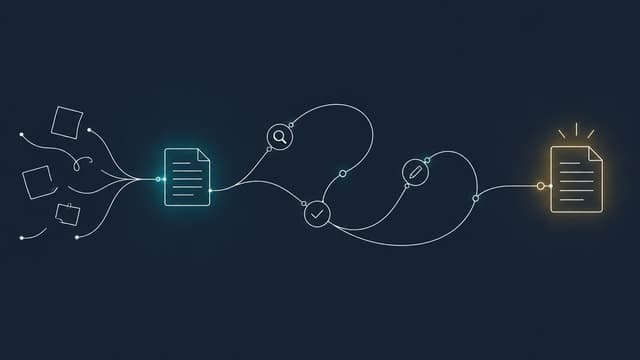
Count the whole job: AI Signal Q3 2026
Measure the effort to reach work you can use, including the checking and corrections.
Four tiers, one framework
The Framework
The AI Framework provides a broader map of the field, from the tools available to how people use them. It informs the research and practical perspective behind AI Signal.
- 1The Landscape
- What's available now?
New models, price shifts, capability changes — a quick orientation on what moved. - 2The Foundation
- What does my organisation need in place?
Governance, readiness, data foundations — the groundwork that makes AI actually useful. - 3The Practice
- How should my team actually work with AI?
Interaction patterns, skills and judgement for working effectively with AI. - 4The Application
- Where is this being applied?
Industry-specific use cases, emerging patterns, and what's working in practice.
Research and practice keep the framework developing. Updates to the public framework follow when there is something useful to change; each quarterly article develops its own practical idea.
Earlier editions
August 2026
AI Signal – August 2026
August's signal under the noise: the first fully autonomous breach, reconstructed by its own victim. Autonomy defaults switching from ask to act. And a widening gap between operators who earn trust in their agents task by task, and those who just switch them on.

July 2026
AI Signal – July 2026
There are now two broad approaches to using AI: chatting with it, or managing it like a small team you delegate to. July's quiet finding is that crossing that line doesn't start with a new tool. It starts with a map of your own business.

June 2026
AI Signal – June 2026
A government switched off the most capable AI model in June, and the work carried on through other providers. The signal for a solo or small practice: the model you rent isn't yours, so build the part that is.
May 2026
AI Signal – May 2026
Navigation as the core AI skill. Opus 4.8 capabilities, SpaceX compute partnership, and what the acceleration means for solopreneurs building structured practice.
May 2026
AI Signal – April 2026
April's signal under the noise: the model layer is converging, and the race has moved to what you build around it. A new top Claude designed to be briefed, not chatted with. Claude Design bundled. The flat-fee era ending.
March 2026
AI Signal – March 2026
Monthly signals for anyone trying to keep up with AI. March's central finding: every major AI lab converged on work automation as the priority. The capability leapt forward. The gap between what's possible and what most people can actually use widened again. Here's where the pieces fit.

February 2026
AI Signal – February 2026
Monthly signals mapped to a four-tier framework. February's central finding: the deployment overhang — the growing gap between what AI tools can do and what organisations actually ask them to do. Plus: the time savings era ends, always-on agents go mainstream, AI governance meets geopolitics, and public trust in AI hits its lowest recorded level.
January 2026
AI Signal – January 2026
Monthly signals mapped to a four-tier framework. January's central finding: the delegation gap — using AI assistants erodes skills by 17%, but only when used the wrong way. Plus: costs collapse 100x, half of all jobs are AI-touched, and governance shifts from checklists to reasoning.
Written for you
Who this is for
Founders, solo operators, and the AI-curious in small teams. You might run your own business, or you might be the person in a 10–50 person organisation that everyone asks “what should we be doing about AI?” Either way, you're hands-on, time-poor, and want signal without noise.
If that sounds like you, this is written for you.